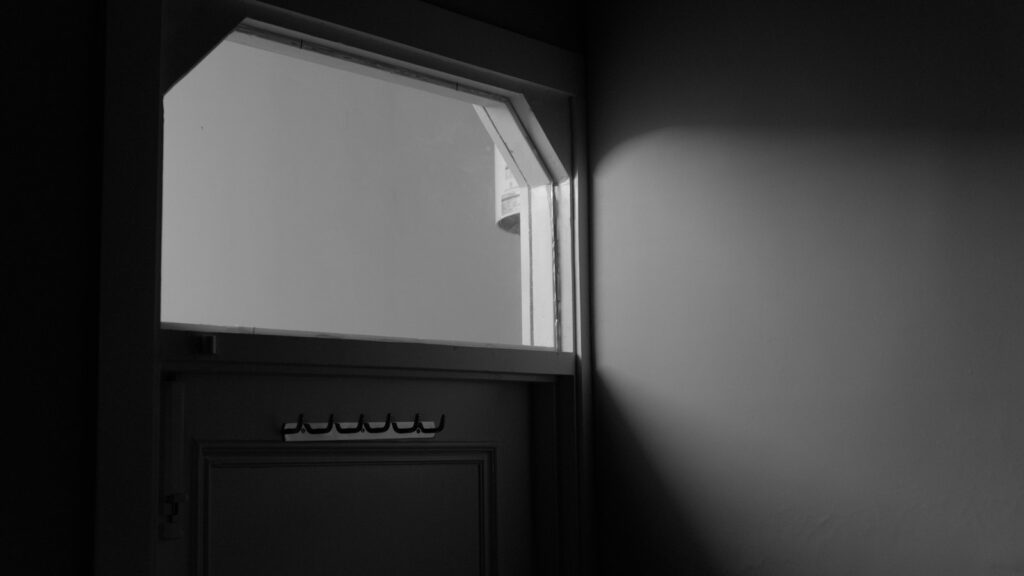
Here is how to identify emotional triggers: notice when your reaction is bigger than the moment in front of you, then trace that reaction backward through your body to the older feeling it carries. A trigger is a present moment touching an unfinished past moment. Every trigger is a doorway, and when you follow it to its original source, it becomes a gateway back to your delight.
Someone forgets to reply. A colleague uses a certain tone. A partner sighs at just the wrong moment. And suddenly you are flooded. Hurt, furious, panicked, small.
Later, when the wave passes, you look back and wonder, Why did that hit me so hard?
That question is precious. Let’s follow it together.
A Trigger Is a Doorway
Across thirty years of research and more than 10,000 sacred and ancient texts, one image kept appearing to me again and again: the threshold. Doors, gates, veils, passages. Places where one world meets another.
I came to see that the sacred traditions were pointing at something we each carry inside.
Your emotional triggers are thresholds. On one side is the present moment, the text message, the tone, the sigh. On the other side is an older moment, often from childhood, that your heart never fully completed.
When a trigger fires, the door between those two moments swings open. The feeling from back then floods into right now.
That is why the reaction feels so big. You are feeling two moments at once.
And that is also why a trigger is a gift. It shows you exactly where the door is. Without the trigger, the old feeling would stay hidden. With it, you can walk through, find what was left behind, and bring it home.
How Emotional Triggers Work
When you were small, your heart met moments it could not yet hold. Being left alone too long. Being criticized when you needed comfort. Being ignored when you were bursting to share something wonderful.
Your body stored the feeling along with every detail around it: the tone of voice, the facial expression, the silence, the time of day.
Years later, when a present moment carries even one of those details, the body recognizes it instantly. Faster than thought, it releases the whole stored feeling. Your heart races, your face flushes, your throat tightens. The Tiny Mind, the part of you run by ego, fear and survival, takes command and reacts as though the original moment is happening again.
This happens in a fraction of a second. Feelings arrive before thoughts, which is why you so often understand your trigger only afterward. You can explore this sequence in do feelings come before thoughts.
The other person’s choices are theirs. Sometimes they truly did something hurtful, and you are allowed to name that. The trigger is the part of your response that carries extra weight from long ago, and that part is where your freedom lives.
Common Emotional Triggers
Triggers tend to cluster around a few tender human needs. As you read, notice which ones make your body stir.
Being ignored or unseen. A slow reply, an interruption, being left out of a plan.
Being criticized or corrected. Feedback at work, a comment about your appearance, a sigh of disappointment.
Being controlled. Someone telling you what to do, making decisions for you, or setting rules without asking.
Being left. A partner pulling away, a friend growing distant, someone leaving the room during a hard conversation.
Being unsafe. Raised voices, sudden changes, unpredictability.
Being unappreciated. Giving and giving with no acknowledgment.
Triggers can also be quiet. A song, a smell, a season, a particular street can open the door just as surely as a harsh word. Pay attention to the moments your mood shifts for no obvious reason. Those are triggers too, speaking softly.
Most people have two or three that are especially strong. These are your primary doorways, and they often connect to the same original source. If you notice the same trigger producing the same outcome over and over, why you keep repeating patterns explains the loop beneath it.
Three Clues That Reveal a Trigger
How do you know whether a reaction is a trigger, or simply a natural response to the moment? Three clues tell you.
The size is bigger than the situation
A forgotten reply produces hours of distress. A small correction makes you want to quit. When the intensity outweighs the event, an older feeling is riding along.
The age feels younger than you are
Pay attention to how old you feel inside the reaction. Many people realize they feel seven, or twelve, or fifteen. That inner age is a precious clue to where the door leads.
The story feels familiar
“Nobody ever listens to me.” “I always have to do everything myself.” “Everyone leaves.” When your reaction comes with an always or a never, you have found a sentence your heart learned long ago. You can uncover those sentences fully in how to identify limiting beliefs.
The Trigger Map: A Practice for Today
This practice turns your next trigger into a map. Do it after a reaction has calmed, when you feel settled enough to be curious.
- Write down the moment, plainly. Just the facts, as a camera would record them. “My partner looked at their phone while I was talking.”
- Write the feeling and its strength. Name the emotion and rate it from 1 to 10. “Hurt, 8.”
- Find the inner age. Close your eyes, recall the moment, and ask, “How old do I feel?” Write the first number that comes.
- Ask that younger you, “When did this happen before?” Let an image, a room, or a person appear. Stay soft and curious. Whatever comes is welcome.
- Write what that younger you needed. To be listened to. To be held. To be told they mattered. Then offer it now, out loud: “I am listening. You matter to me.”
And in the heat of the moment itself, keep one simple move ready. When you feel the flood rising, press your feet into the floor, lengthen your out-breath, and silently name it: “This is an old feeling visiting a new moment.” Those few words create a sliver of space between the past and the present. In that space, you get to choose your response.
You may not catch it every time. Some days the wave arrives before you can name it at all. Meet those days with the same kindness you would offer a child learning to walk. Each time you notice, even an hour later, you strengthen the path from reaction to awareness.
Repeat this map with each strong trigger for a few weeks, and you will begin to see the same doorway appearing again and again. That recognition is enormous. It means the original source is within reach.
If a memory feels too heavy to hold, pause, ground yourself, and go slowly. Some doors deserve a trusted companion, and inner child healing is a gentle place to continue.
Your Gateway Is Already Waiting
In my private sessions, I take clients through 12 emotional gateways. Every trigger leads to one of them. When you know which gateway is most active for you, your triggers start to make beautiful sense, because you can see the single source behind many different reactions.
That is exactly why I created the free Find Your Gateway assessment. In a few minutes, it shows you which gateway is calling for your attention right now, so you can stop chasing individual triggers and go straight to the source.
When a gateway clears, something wonderful happens. The triggers connected to it lose their charge, often all at once. The tone of voice that used to flood you simply passes through. You stay present, warm and clear.
And in that space, delight rises. Delight is the soul’s natural inner resonance, as unique as your thumbprint, and it was there beneath every trigger all along. The Law of Delight, the first universal law, teaches that when you clear the layers, you return to what you already are.
How to Heal an Emotional Trigger
Healing a trigger happens in the heart. Your Giant’s Heart, the part of you that holds your soul, your delight and your mission, is ten thousand times more powerful than your mind. Understanding a trigger begins the healing. Feeling compassion for the younger you behind it completes it.
Be patient with the process. Some triggers soften quickly. Others release in layers, especially the ones tied to painful experiences. And some reactions are simply healthy boundaries, your body wisely telling you that something truly is wrong. Honor those.
As your triggers heal, your energy returns to creation. This is a quiet secret of learning how to manifest with ease: a heart free of old charges creates with clarity. If you are curious how this connects to the wider pattern of pulling back from good things, how to stop self sabotage goes deeper, and the shadow self welcomes every part of you home to light.
Questions You May Be Asking
How do I identify emotional triggers?
Notice when your reaction is bigger than the moment, when you feel younger than your age, or when the reaction comes with an “always” or “never” story. Then trace the feeling back through your body to the older moment it carries. Writing each trigger down reveals the patterns quickly.
How do emotional triggers work?
A present moment carries a detail, like a tone of voice or a silence, that matches an unfinished moment from your past. Your body recognizes it faster than thought and releases the stored feeling, so you feel two moments at once. That is why triggered reactions feel so intense.
What are common emotional triggers?
Common triggers include feeling ignored, criticized, controlled, left, unsafe, or unappreciated. Most people have two or three especially strong ones. They often connect back to the same original source.
How do I heal an emotional trigger?
Follow the trigger back to the younger you who first felt it, and offer that part of you what it needed, such as being listened to or held. Compassion from the heart completes what understanding begins. Go gently, and seek support for triggers tied to painful experiences.
Every Door Leads Home
The next time a trigger fires, pause. Breathe. And whisper to yourself, Here is a door.
You do not have to walk through it right away. Simply knowing it is a door changes everything. The flood becomes information. The reaction becomes an invitation.
And on the other side of every door, a younger you is waiting to be found, holding a piece of your delight.
Have you done the free assessment? Start now. No email. No gatekeeping. Yours instantly.
When you are ready to clear the gateway beneath your triggers, book The Shift, one private session with me where we find the pattern underneath your desire and clear it together, live.